MoleCool — July 2024
Context and intent
MoleCool is a physical serious card game designed to help high school students understand the rules of molecular structures and chemical nomenclature. The goal is to make chemistry feel more tangible and less abstract by turning structures into something you can build, break, and reason about through play.
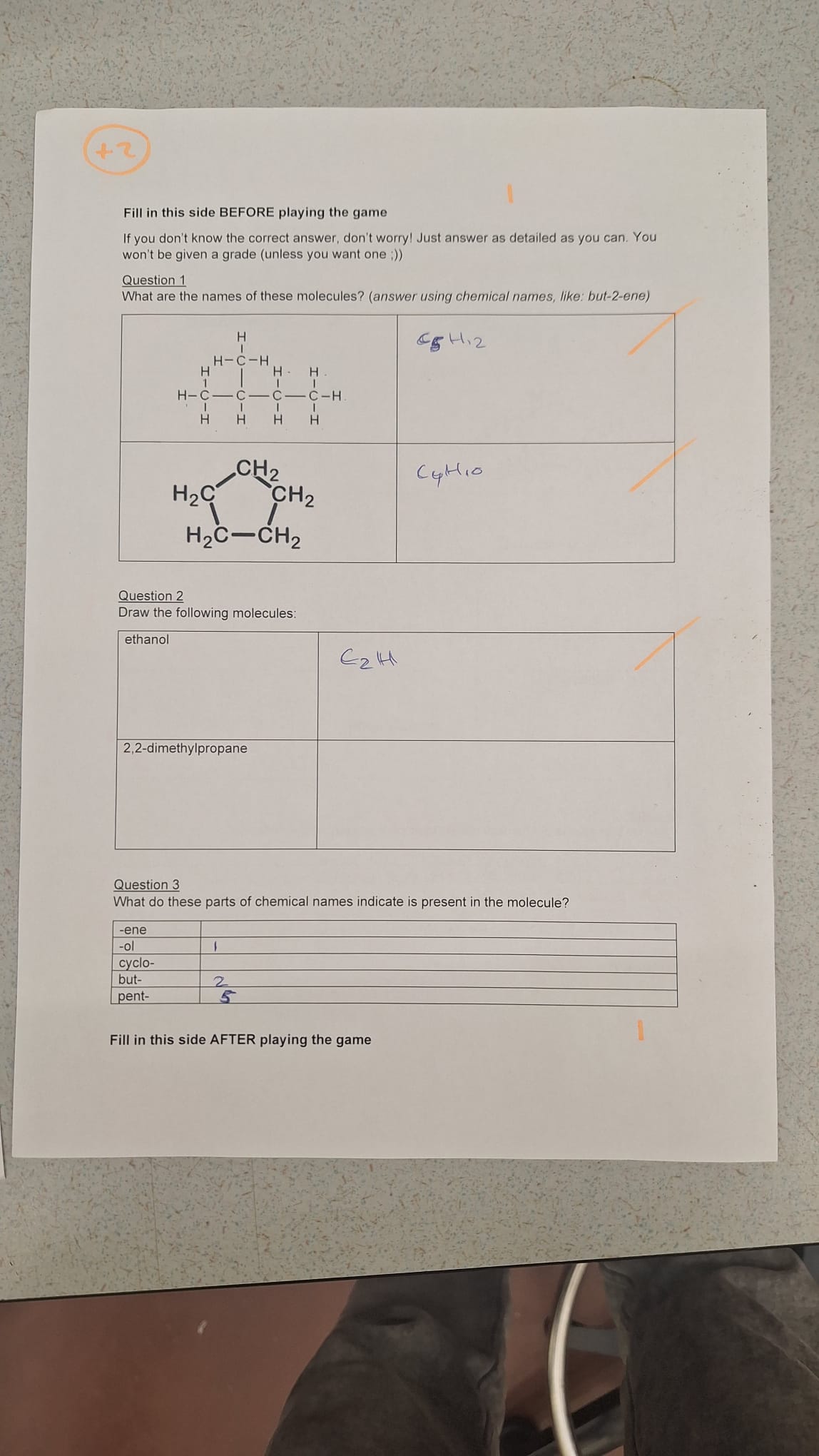
The main objective is to internalize core concepts through gameplay: players build molecules, sabotage others, and race to complete goals. The game uses gamification to make students more comfortable with how molecules are formed, improving both confidence and chemical insight.
Concept and outcome
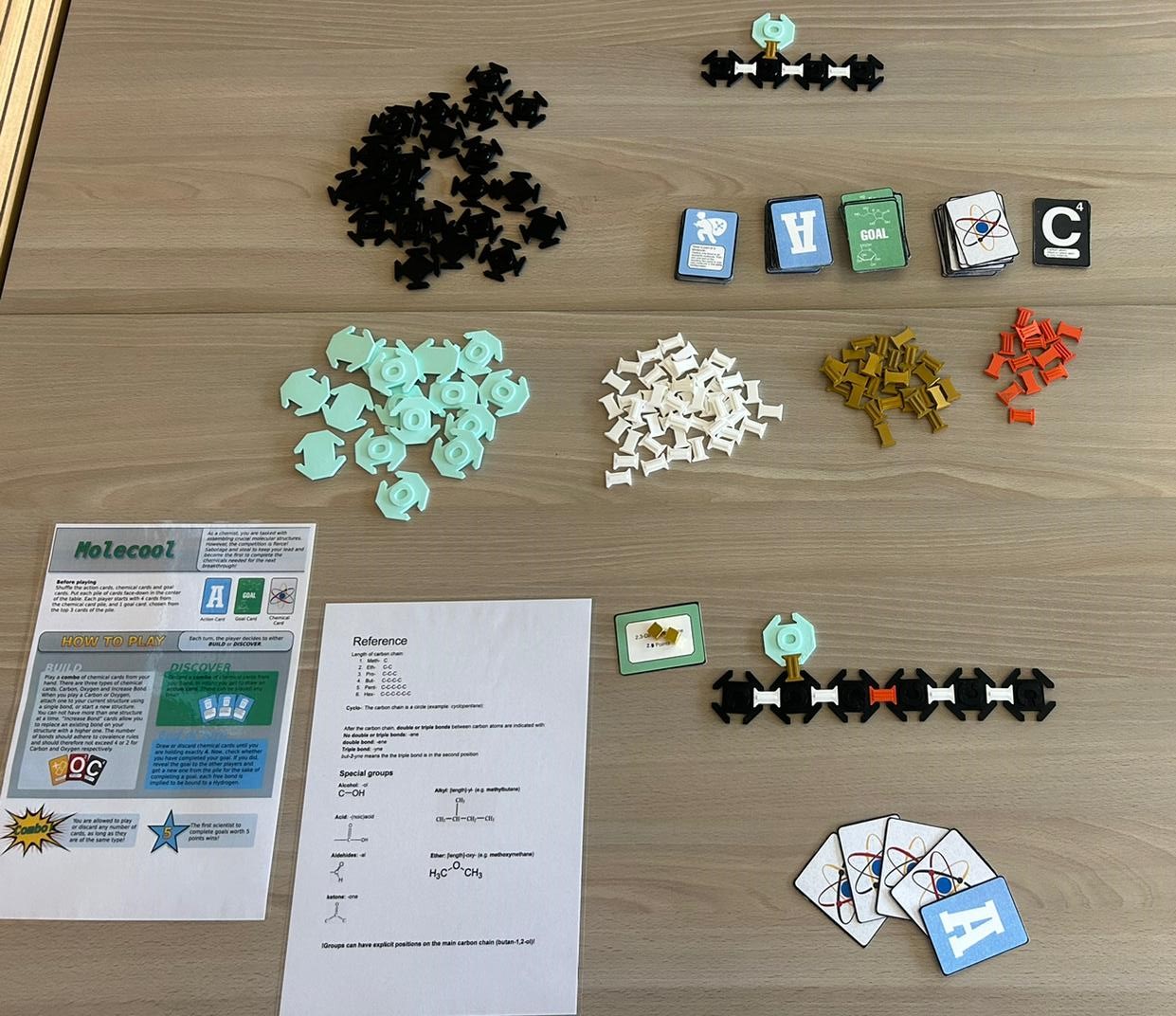
The game combines three card types with tangible components:
- Chemical cards: carbon, oxygen, and bond increasers
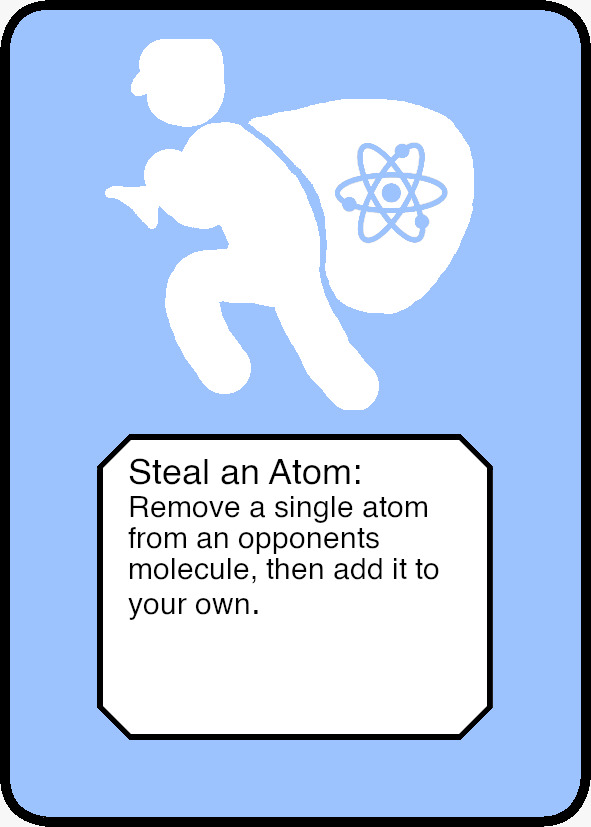
- Action cards: sabotage, stealing, and strategic interference
- Goal cards: molecule structures players must build to earn points
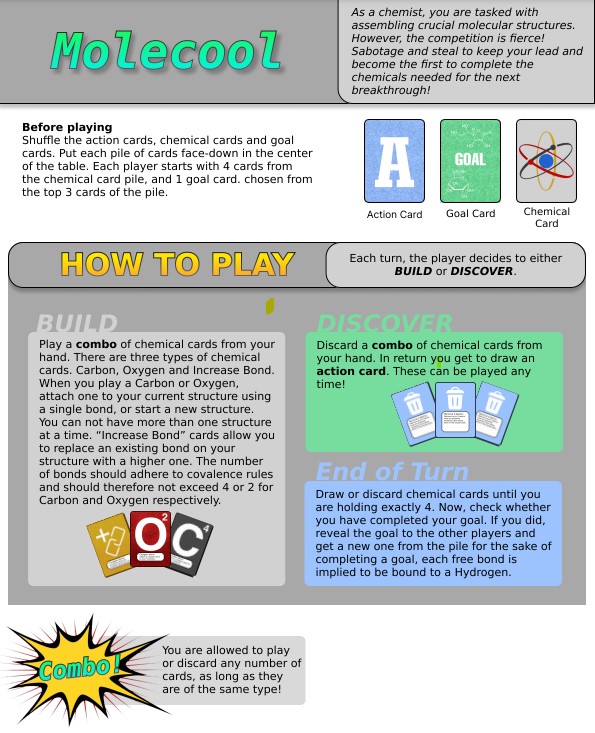
Players take turns and choose between two actions:
- Build: place a combination of chemical cards to form a valid molecule using physical pieces
- Discover: discard a combination to draw an action card
The first player to complete goal molecules worth 5 points wins. Gameplay is supported by 3D printed atom tokens, physical bond connectors, and a reference sheet to keep the chemistry rules accessible during play.
My role
This project was done with an interdisciplinary team of 5 students. I pushed this project towards a high school curriculum game, as I am very intrigued by creating such educational games. Our group used a lot of paper prototypes to refine and iterate on the game. I was responsible of creating and printing the 3D printed game elements.
Reflection and learning
As I want to create educational applications for high school students, this project seems to fit perfectly. However, we tested and created the game with our other students. It would have been ideal if we were able to design this game for actual high school students and iterate on their actual interactions.
Project snapshot
Created by Martijn Drenth, Max Willemsen, Adrienne Burgers, Thomas Smakman, Tjerk Weijens and Roland Wit